- Air Peace strengthens leadership pipeline with key flight operations appointments
- Transport Summit Holds Friday
- What Abuja private jet door blowout reveals about aviation safety
- Jet fuel price volatility threatens supply companies' viability, warns CITA Energies Chief
- FAAN MD: Financing talks for Lagos airport rail extension reach advanced stage



IWD: Inspiring story of Nigerian women shaping aviation sector
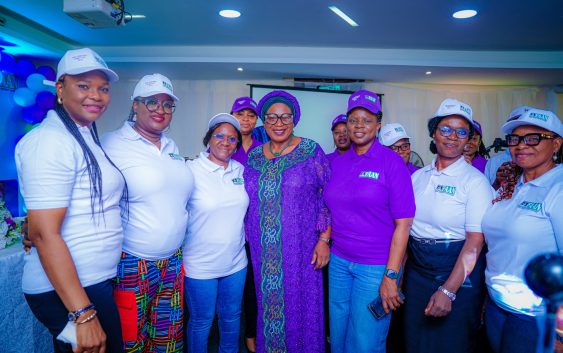
From defying societal norms to shattering glass ceiling, women have made significant contributions to aviation development, writes, WOLE SHADARE

Resilience
A few years ago when Aero Contractors conducted all female flight operations, the country was pleasantly surprised at what women can do. It sent a signal that women can undertake any role in aviation like their male counterparts from flying mid-size aircraft to super jumbo jets like the B747, B777, A330, A350 and the biggest commercial aircraft like the A380 aircraft including fighter jets, aircraft engineering, administration and any other task in the field of aviation.
The record-setting all-female crew comprised Capt. Simisola Ajibola, Senior First Officer Quincy Owen, SEP Instructor Rosemary Uagbor, Cabin Executive Chidimma Chimezie and Cabin Executive Opakirite George.
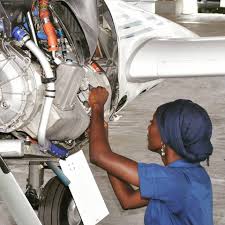
It equally underscored the tenacity of women to be air traffic controllers and engineers among other jobs in the sector that are dominated by males.
Few years after that, Air Peace embarked on similar exercise when the carrier conducted all-female flight operation. The all-female crew flight shows what women can accomplish with focus and determination.
The story has an unmistakable inspirational quality to it. In a country where girl-child education is not exactly on the front burner in several areas, the feat is a picture of possibilities.

Exemplary leadership
In administration, we have other women that are doing remarkably well in Nigerian aviation industry. There is a long list of accomplished women including the first female Managing Director of the Federal Airports Authority (FAAN), Mrs. Olubunmi Kuku who is setting the pace in FAAN.
Dr. Mrs Anastasia Gbem is credited to be first female Nigerian Aviation and Aerospace Lawyer. Gbem who is the Director of Human Resources and Administration at the Nigeria Civil Aviation Authority (NCAA) has made immense contributions to the development and growth of civil aviation in Nigeria. Director of Public Affairs and Consumer Protection, Mrs. Obiageli Orah is a remarkable professional. Not to forget Nkechi Onyenso, the Managing Director/Chief Executive Officer of Pathfinders International Limited.
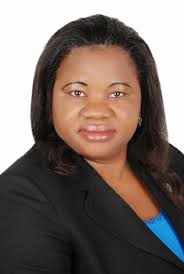
Onyenso, a lawyer is a dynamic woman who has demonstrated the ability to take up challenging tasks and make success out of them. She is inspiring younger generations with her strength of character. She has over two decades of experience in aviation security and consulting, law, administration, corporate governance and compliance
Dr. Felicia Nnenna Agubata is the Deputy General Manager, the Nigerian Airspace Management Aegncy (NAMA) Agubata’s skills and work ethics have earned her three letters of commendation from two different Managing Directors of the agency.
Also on this list of women who have shown exemplary leadership in the field of aviation and that have shattered the glass ceiling are a former Director of Air Transport Regulation in NCAA, Ms. Iyabo Sosina who later became the Secretary General of Africa Civil Aviation Commission(AFCAC); Ms. Funke Adeyemi was few years ago recognized as one of the 200 globally Most Influential People of African Descent (MIPAD), in affiliation with the United Nations Decade for People of African descent.
Adeyemi succeeded Sosina as AFCAC Secretary-General. Before her appointment, she headed the Diversity and Inclusion initiative of the International Air Transport Association (IATA).
There are other women both locally and domestically that are pulling their weight in the field of aviation. Nigeria has shown that it is not behind in producing female aviation professionals. Other African countries are also doing great in this regard.
But more inspiring is the story of beautiful Nigerian female twin pilots, Hassana and Huseina Edili-Ogaji who are doing exploits in the aviation sector. Their story is that of what a man can, a woman can do better. These twins became interested in aviation because they grew up in the environment.

They watched their parents going to the flight line in the Nigerian Air Force every day. They were offered admission to the Nigerian College of Aviation Technology (NCAT), Zaria, but they did not have the resources then.
Worrying statistics
The International Society of Women Airline Pilots (ISA) has estimated that just 4,000 of the world’s 130,000 pilots or a mere three per cent, are female pilots. These women are paving the way for a new tomorrow.
According to a recent report from the Women in Aviation board, “Women make up less than 20% of the workforce in most aviation occupations and only 4.6% of air transport pilot jobs.”
The shortage of pilots globally, as well as the many factors attributing to the underrepresentation of women in aviation, has prompted the discourse on why few women take up careers in aviation just as major airlines and educational institutions are focusing on increasing gender diversity in the sector .

There are several barriers within the aviation industry that prevent women from seeking roles as pilots. Discrimination can affect hiring practices, making it challenging for women to break into the industry, and decisions can be influenced by both conscious and unconscious biases.
Barriers
Because there have been so few female pilots, aspiring women aviators lack role models to inspire and guide them, and the younger generation may find it challenging to envision themselves as pilots.
As this role is typically targeted towards men, it becomes harder to attract new female candidates and a lack of support system for women pilots can be discouraging for those in and entering the field.
Financial barriers also contribute significantly to the low representation of women in pilot careers. Flight training can be expensive, including fees for flight hours, instructor time, and certifications.
For career changers, women have faced income disparities across all industries. Similarly, unequal pay affects not only initial training costs but also ongoing expenses like recurrent training and type ratings.
Experts’ views

Experts suggest the myriads of challenges surrounding the practice of the profession are the reasons there are few women in the profession.
Former Rector, Nigerian College of Aviation Technology (NCAT), Abdulsalami Mohammed said it took time before women started developing interest in aviation as the first female pilot in NCAT was trained in the late 1970s, just as the airline industry also wasn’t employing many females at a time.
“One of the challenges is that pilots are very expensive to train and then you do not stay for long without flying or else you forget, that is why people go for recurrent training. We have to do certain numbers of take-offs and landings within certain number of days. We also do medical examinations on a regular basis. “If a woman gets pregnant, the law says she will stop flying.
She will not fly again, until after she gives birth and she is declared medically fit. After she gives birth, she needs to train again before she flies an aircraft. This will take a minimum of 12 months. During this period, the airline she works for will be paying her salary and she has to retrain again after laying off for so long,” said Mohammed.
The Managing Director of FAAN, Kuku has proposed that the agency starts a mentorship programme for the women with a view to helping them with career growth in the aviation industry.

She said the idea is to create a world where talent rises regardless of gender, innovation flows from all voices, and differences which make them stronger and not weaker.
“Limiting opportunities for half our workforce limits opportunities for everyone. The productivity we lose, the innovations we miss, the talents we waste — these are not merely statistics; they’re lost opportunities for all of us.The cost of gender inequality according to her extends beyond finances; it tears at the very fabric of our society”, she said.
Director of Public Affairs and Consumer Protection, Mrs. Obiageli Orah said there is a need I we need to do to open up the horizon alluding to the mentorship programme announced by Kuku.
Orah further stated that there is the need to create more awareness for people to understand what this is all about.

“You need to have a good understanding before you can make up your mind. We need to create more awareness and be able to put the message the out there for other women to know that they can actually you come into leadership and have a career in aviation. We have women pilots, engineers and administrators.”
Last line
The future is bright for female pilots in Nigeria considering the fact that the number of female engineer, pilots, administrators’, engineers, air traffic controllers and pilots just as the administration of President Bola Tinubu appointment of women into key position was part of the government’s 35% national gender policy.
Google+